
How Porcelain Tub Refinishing Works
 By Lisa McCabe
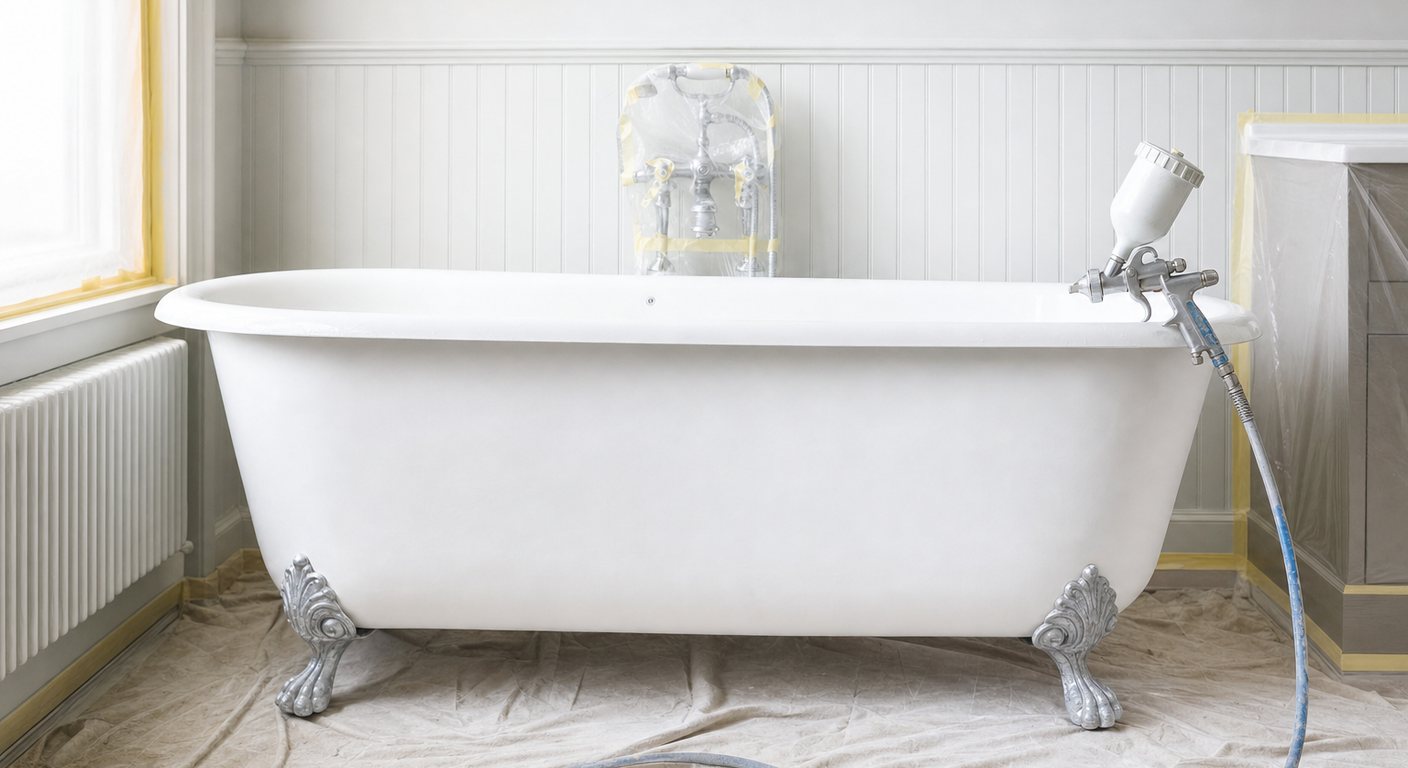
Porcelain tub refinishing — also called reglazing or resurfacing — is a professional spray process that chemically bonds new commercial-grade coatings directly to your existing tub surface. A technician preps the porcelain, applies primer and multiple finish coats in place, and leaves you with a smooth, like-new result in a single day. No demolition, no plumbing, no weeks of disruption.
- The full five-step process — masking, sanding, chemical wash, two-coat primer, and 3–4 finish coats — takes one day for most tubs.
- Surfaces cure in 24–48 hours before normal use; the coating bonds chemically to the porcelain, it is not simply painted over it.
- Low-odor, low-VOC materials mean most homeowners can stay home during the work.
- Refinishing costs a fraction of full tub replacement, with no tear-out mess or contractor scheduling headaches.
- The process works on porcelain-on-cast-iron, porcelain-on-steel, fiberglass, cultured marble, and acrylic tubs.
Why South Florida Homeowners Choose Refinishing
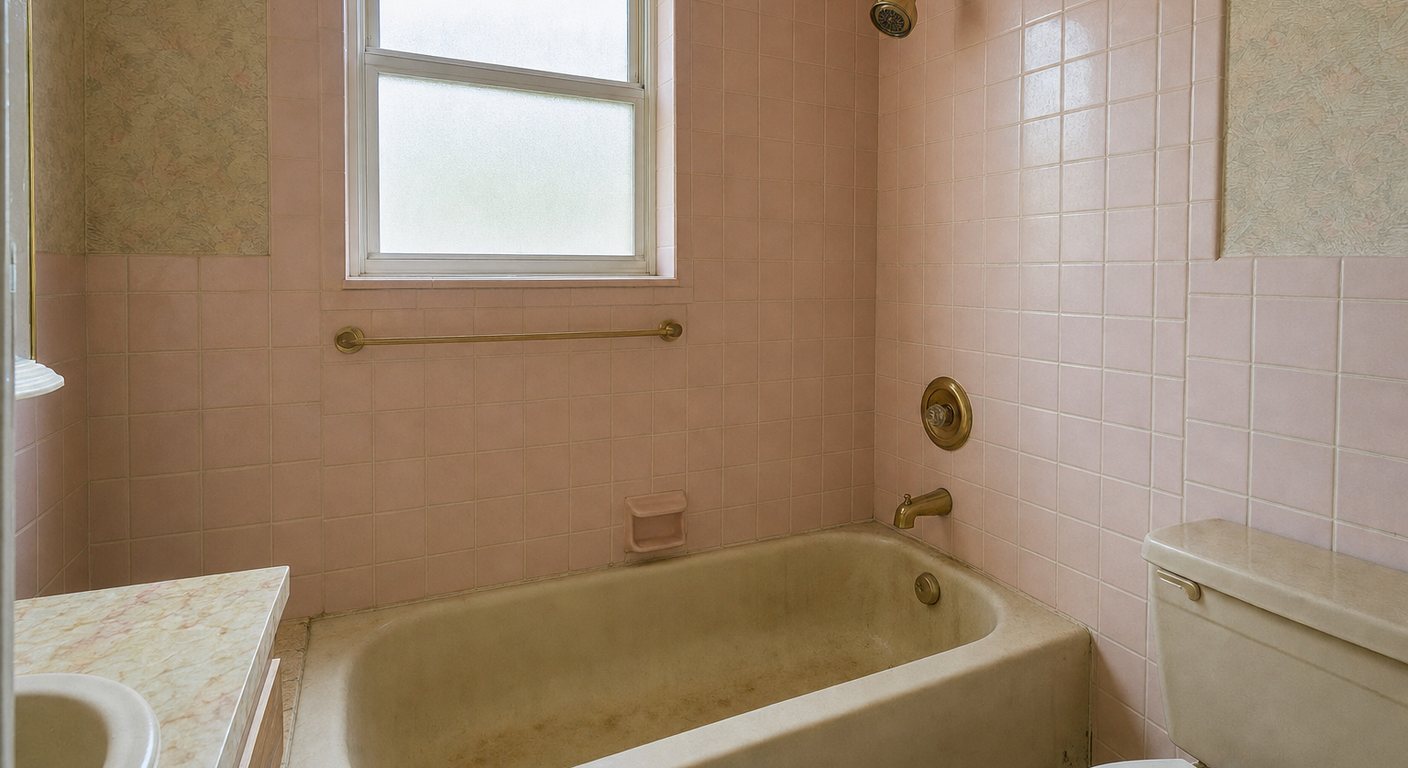
Drive through any Boca Raton neighborhood built in the 1980s or 1990s and the bathrooms tell a familiar story: pink or almond porcelain tubs that were perfectly stylish thirty years ago and are now stained, dull, or chipped from decades of hard South Florida water. Full replacement means a plumber, a tile contractor, dumpster fees, and weeks of scheduling — plus the dust and debris that HOA boards in Broward and Palm Beach County condos rarely tolerate well.
Bathtub resurfacing sidesteps all of that. The tub stays exactly where it is. A licensed technician brings the equipment, does the work in your bathroom, and leaves the same day. According to the National Association of Home Builders, bathroom updates consistently rank among the highest-return home improvements — and refinishing delivers that visual update at a fraction of what a full remodel costs.
Refinishing, reglazing, and resurfacing all refer to the same professional process: chemically bonding new coatings to an existing surface. The terms are used interchangeably in the industry, and any technician worth hiring will use the same multi-step spray system regardless of what you call it.
The Five-Step Refinishing Process, Explained
At Artistic Refinishing, every bathtub reglazing job follows the same structured process we have refined over 30 years serving Palm Beach, Broward, and Miami-Dade counties. Here is exactly what happens from the moment we walk in to the moment we hand the bathroom back to you.
Mask and Protect
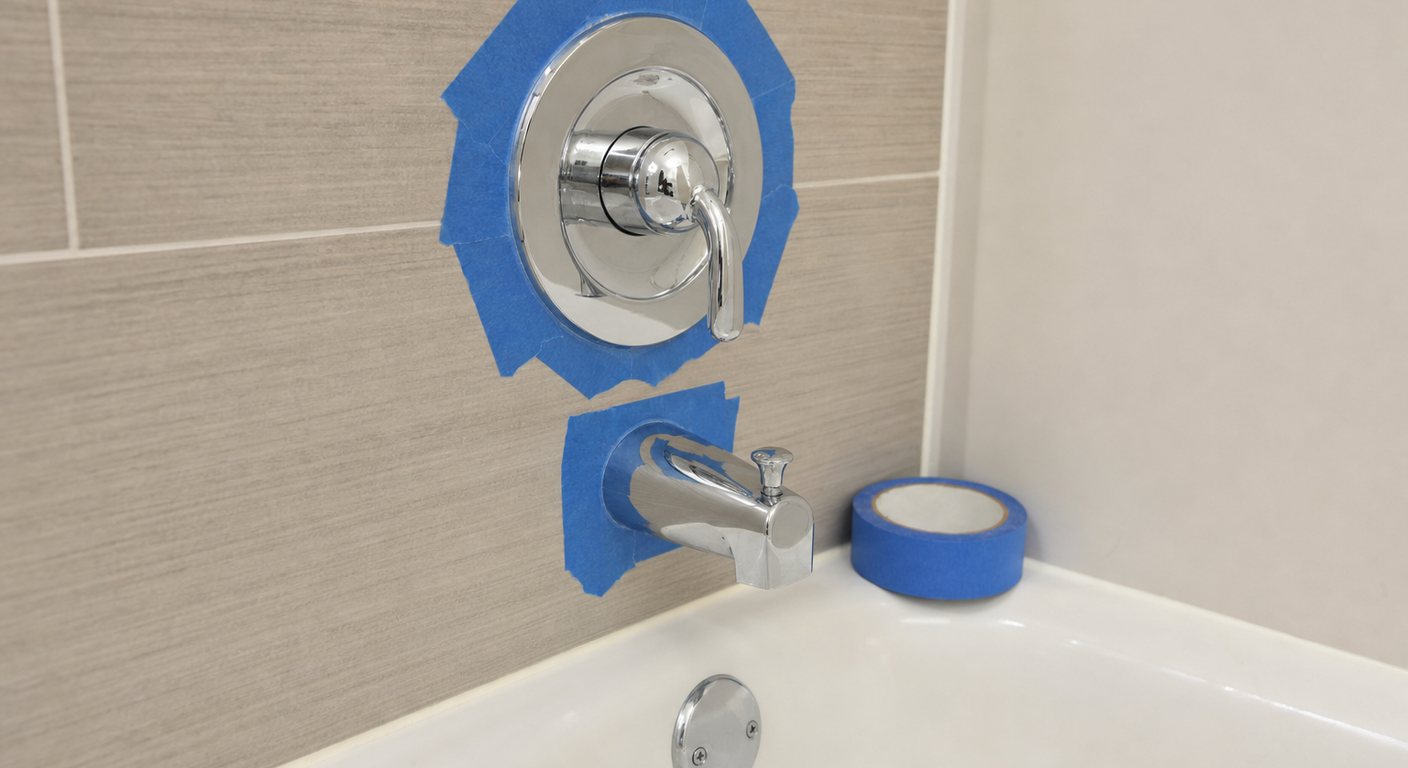
The technician covers every surface that is not being refinished — walls, floors, fixtures, and hardware — with protective masking. This keeps overspray off your tile and protects the drain. Proper masking is not just housekeeping; it is what separates a clean professional result from an amateur one.
Sand the Surface
The existing porcelain is sanded by hand and with mechanical tools to scuff the glaze and create a mechanical bond profile. This step is critical. Skipping it is the number-one reason DIY spray kits peel within months — the coating has nothing to grip. A professional sands methodically, including corners and the tub deck, until the surface has uniform texture.
Chemical Wash and Degreasing
After sanding, the surface is cleaned with a chemical wash that removes soap residue, body oils, calcium deposits, and any fine dust from sanding. South Florida hard water leaves mineral scale that regular cleaners miss entirely. This wash step is what makes the primer stick at a molecular level rather than just sitting on top.
Two Coats of Self-Etching Primer
Self-etching primer is spray-applied in two coats. “Self-etching” means the primer contains a mild acid that micro-etches into the cleaned porcelain as it cures, creating a chemical bond — not just a mechanical one. This dual bonding is what gives a professionally refinished tub its durability. Each coat is allowed to flash (partially dry) before the next is applied.
Three to Four Spray-Applied Finish Coats
Commercial-grade topcoat is spray-applied in 3–4 coats using professional spray equipment. The result is a smooth, high-gloss finish without brush marks or roller texture. Color matching is done at this stage — we can spray any color, including custom matches for tile, fixtures, or HOA color palettes. The final coat is inspected under light before the technician unmasks and cleans the workspace.
The self-etching primer is what separates a refinished tub that lasts years from one that peels in months — it bonds chemically to the porcelain, not just mechanically.
What the Cure Window Means for You
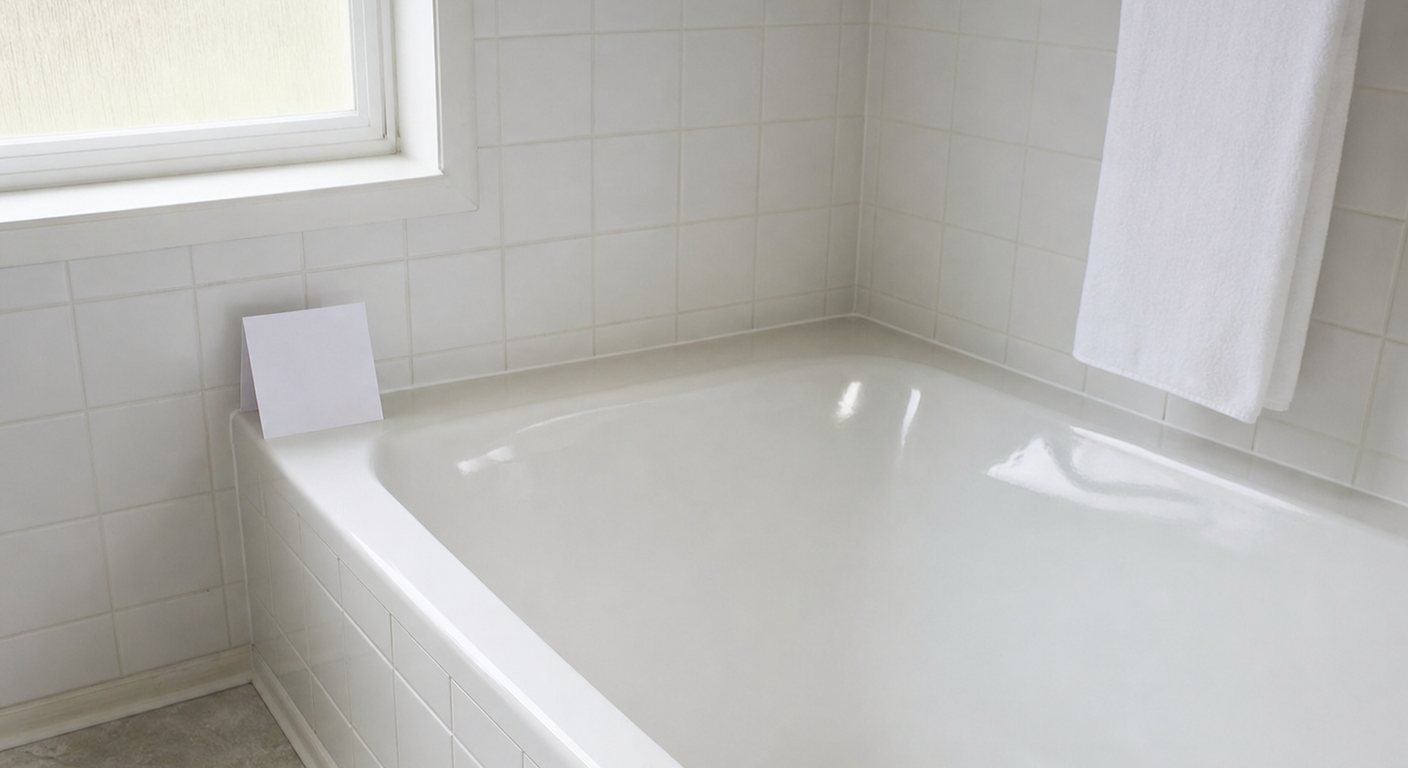
After the final coat is applied, the tub needs 24–48 hours to cure before normal use. “Cure” is different from “dry.” The surface may feel dry to the touch within hours, but the coatings are still cross-linking at a chemical level during that window. Using the tub too soon — running water, sitting in it, placing products on the ledge — can leave marks or compromise adhesion before the coating has fully hardened.
We tell homeowners to plan the job around a day they can use another shower, or to schedule it just before a trip. For rental property owners in Fort Lauderdale or West Palm Beach turning a unit between tenants, that 24–48 hour cure window fits comfortably inside a standard turnover schedule.
Use only non-abrasive liquid cleaners on a refinished surface — no scrubbing pads, no powdered cleansers, no bleach sprays left to sit. The coating is durable, but abrasives will dull the gloss over time. A soft cloth and mild soap are all you need.
Refinishing vs. Replacement: An Honest Comparison
Refinishing is the right call for most tubs — but not every tub. Here is a straightforward comparison to help you decide. You can also review a deeper breakdown on our bathtub refinishing vs. replacement costs page.
| Factor | Refinishing | Full Replacement |
|---|---|---|
| Time to complete | Hours to one day | Days to weeks |
| Demolition required | None | Yes — tile, surround, plumbing |
| Cost | Fraction of replacement | Significantly higher |
| Disruption | Minimal; stay home during work | Major; bathroom out of service |
| Works on | Porcelain, fiberglass, acrylic, cultured marble | Any substrate |
| When replacement is better | — | Structural cracks, layout changes, severe substrate failure |
Replacement makes sense when the tub has a structural crack that goes through the cast iron, when a homeowner wants to change the bathroom layout entirely, or when the substrate is so compromised that coatings have nothing sound to bond to. A good refinishing contractor will tell you honestly which situation you are in — and we do exactly that during our free estimate visit.
Does It Actually Look Good? Addressing the Real Concern
The most common hesitation we hear is: “Will it just look painted?” The short answer is no — when done correctly with professional spray equipment and commercial-grade coatings, a refinished porcelain tub has a smooth, gloss finish that reads as factory-finished. There are no brush marks, no roller stipple, no visible texture. The EPA’s guidance on low-VOC materials reflects the same coatings technology used in professional refinishing today — formulations have improved significantly and the result shows.
What affects the final appearance is substrate condition. A tub with light staining, dullness, and minor chips will come out looking excellent. A tub with heavy crazing or significant rust under the porcelain may need chip repair work first — which we do as part of the prep process. We will always walk you through what to expect before we begin.
For more on what the finished result looks like on different surfaces, our bathtub refinishing service page covers the full range of work we do across South Florida.
We also offer non-slip safety treatments applied to the tub floor at the time of refinishing. For households with older adults or young children, this is worth asking about when you schedule your estimate — it adds no meaningful time to the job.
Frequently Asked Questions
How long does a porcelain tub refinishing job actually take?
Most single tub jobs take anywhere from three to six hours on-site, depending on the size of the tub and the condition of the surface. The bathroom is ready to use 24–48 hours after the final coat is applied. The total disruption to your household is roughly one day plus an overnight cure — far less than even a minimal replacement project.
Can a tub be refinished more than once?
Yes. A tub can be refinished multiple times, provided the substrate is still sound and the previous coating is in good condition or is properly stripped before recoating. Many rental property owners in South Florida refinish the same tub between long-term tenants as part of a standard unit refresh.
Is the process safe to have done while I am home?
We use low-odor, low-VOC coatings and ventilate the bathroom during the job. Most homeowners stay home without issue. We do recommend keeping the bathroom well-ventilated with windows open or a fan running, and staying out of the immediate workspace while the technician is spraying. Sensitive individuals — those with respiratory conditions, young infants — may prefer to be out of the house during the spray portion of the job.
What surfaces can be refinished besides porcelain tubs?
The same process applies to fiberglass tubs and showers, acrylic tubs, cultured marble, tile (walls and floors), countertops, and bathroom vanities. We also refinish kitchen cabinets using a process adapted for wood and MDF substrates. If you have a surface that is dated or worn, it is worth asking — the answer is usually yes.
Will refinishing fix chips and cracks in the porcelain?
Chips and small cracks are repaired as part of the prep process before priming. The repair is filled, sanded smooth, and primed along with the rest of the tub, so it disappears under the finish coats. Deep structural cracks that go through the cast iron base are a different matter — those may indicate the tub needs replacement rather than refinishing, and we will tell you clearly if that is the case.
Get a Free Estimate on Your Tub
Artistic Refinishing has been spray-applying commercial-grade coatings to South Florida tubs, showers, and surfaces since 1994 — licensed, insured, and family-owned. Call or request a free estimate online and we will tell you exactly what your tub needs.

About Artistic Refinishing
Don't replace it. Refinish it. Family-owned since 1994, Artistic Refinishing spray-applies commercial-grade coatings to bathtubs, showers, tile, countertops, cabinets, and vanities across South Florida — like-new results in days, at a fraction of the cost of replacement, with no demolition. Visit artisticrefinishing.com →