
Shower Refinishing: What South Florida Homeowners Should Know
 By Lisa McCabe
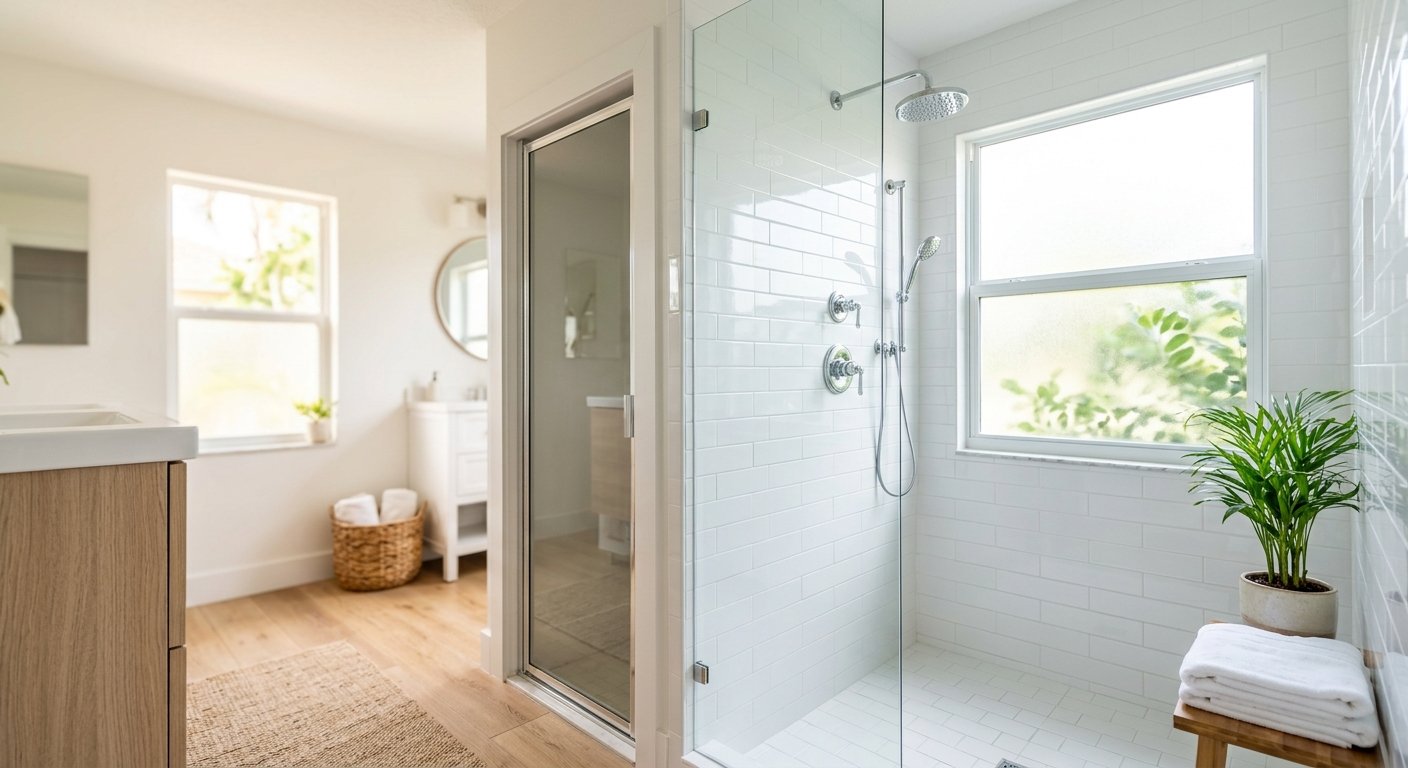
Shower refinishing — also called reglazing or resurfacing — is the process of applying commercial-grade coatings directly over your existing shower surfaces to restore them to a like-new appearance. It works on fiberglass, acrylic, ceramic tile, and cultured marble, and it can be completed in a single day with no demolition, no plumbing work, and no weeks-long disruption to your home.
- Shower refinishing is a legitimate, durable alternative to full replacement — not a temporary patch.
- The five-step professional process (mask, sand, chemical wash, two primer coats, 3–4 finish coats) delivers a factory-sprayed appearance, not a brush-painted look.
- Surfaces need 24–48 hours to cure before normal use — plan accordingly.
- Refinishing costs a fraction of full shower replacement, with no demolition, no mold-exposure risk from tile tear-out, and no contractor parade.
- South Florida’s older condo and home stock — heavy with 1980s–2000s tile and fiberglass — is well-suited to this process.
Why South Florida Showers Age Faster Than You’d Think
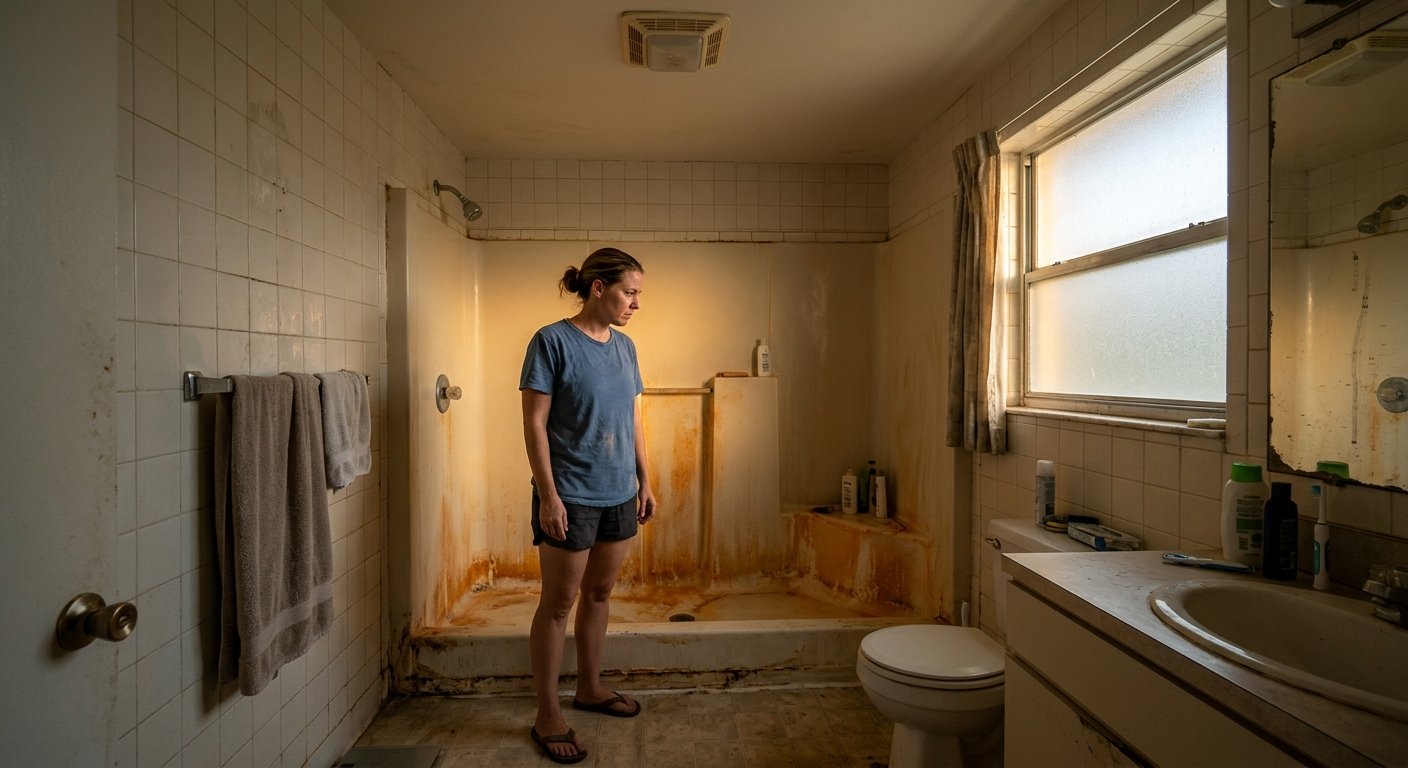
Hard water, high humidity, and a bathroom ventilation system that barely keeps up — these are standard conditions in a Boca Raton condo or a Delray Beach home built in the 1990s. Mineral deposits from South Florida’s notoriously hard municipal water etch into porous grout and dull gel-coat surfaces over time. Coastal humidity accelerates mildew staining. And older fiberglass shower pans develop a chalky, yellowed appearance that no amount of scrubbing fully reverses.
For many homeowners across Palm Beach, Broward, and Miami-Dade counties, the instinct is to call a contractor and price out a full bathroom gut. But that process involves tear-out, dumpsters, potential mold remediation once the walls open up, and weeks of your only bathroom being out of service. Refinishing offers a different path.
Ceramic and porcelain tile found in older South Florida condos can almost always be refinished in place — the existing tile becomes the substrate for the new coating. No demolition means no risk of disturbing asbestos-containing materials sometimes found in mastic adhesives behind 1980s tile, an important consideration in this region’s older housing stock.
What Surfaces Can Actually Be Refinished?
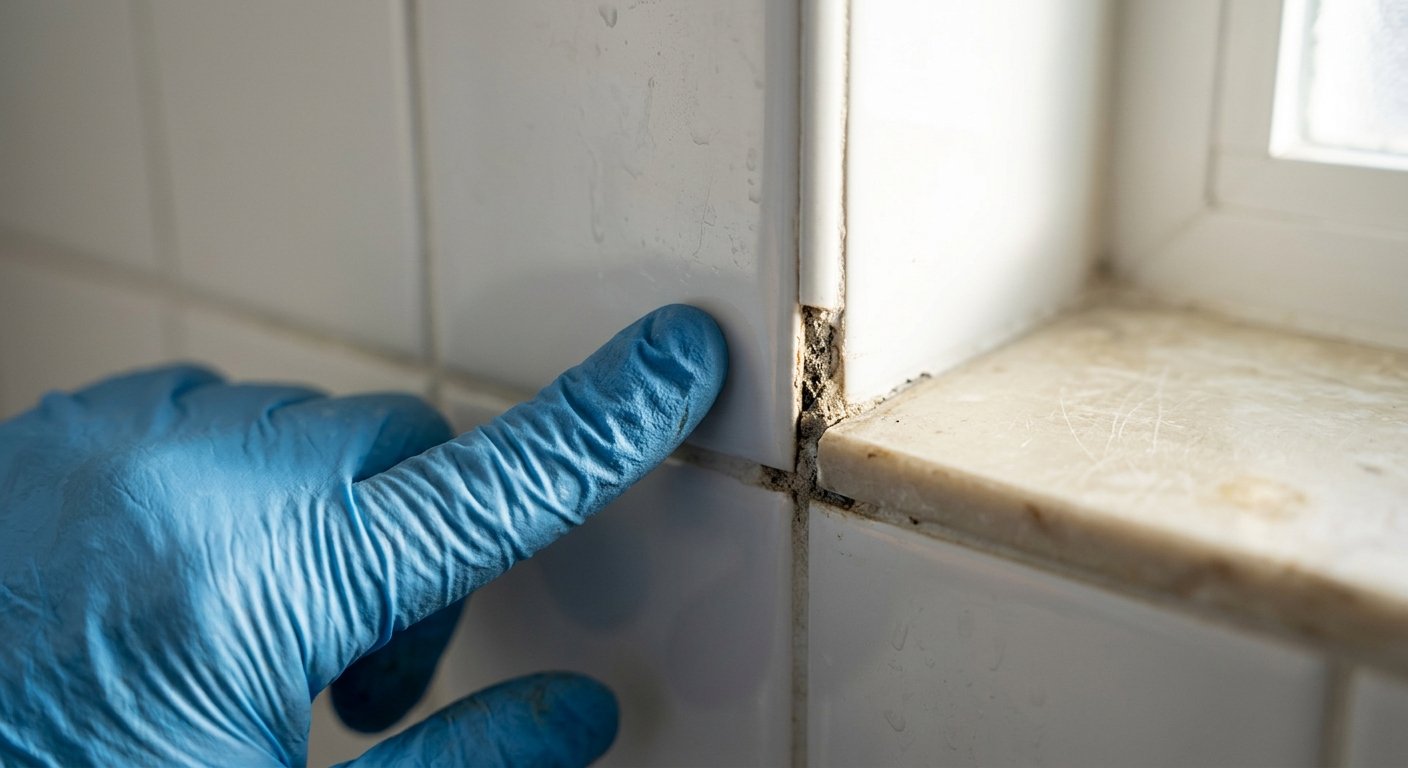
Homeowners sometimes assume refinishing is only for plain white fiberglass tubs. In practice, professional surface refinishing handles a wide range of shower materials:
- Fiberglass and acrylic shower pans and surrounds
- Ceramic and porcelain tile (walls, floors, and niches)
- Cultured marble and solid-surface shower walls
- Cast iron and steel tub-shower combos
- Prefabricated shower units common in rental properties and condos
Color is not a limitation either. Whether the goal is a clean bright white, a warm gray, or a custom color match to an existing vanity or tile accent, professional spray systems deliver consistent, even coverage. If you have a harvest-gold tile shower from 1987 that you want to take to a neutral tone, that is a realistic outcome — no tile removal required. You can explore color options through Artistic Refinishing’s shower refinishing service page before scheduling an estimate.
The Five-Step Professional Process, Explained Simply
Understanding what actually happens during a refinishing job helps set realistic expectations — and explains why professional results look dramatically different from a spray-can DIY attempt.
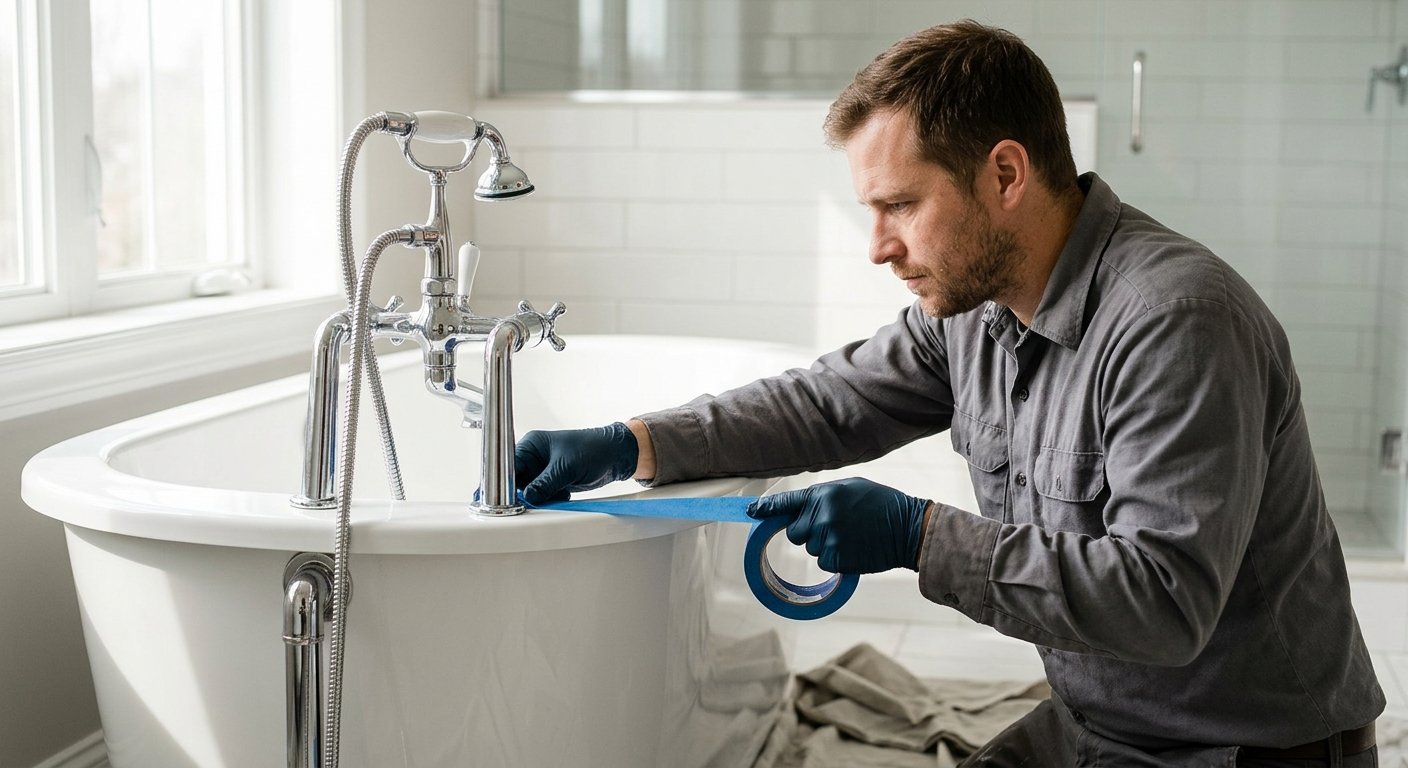
Mask and protect
Everything adjacent to the work area — floors, fixtures, plumbing hardware, glass doors — is masked off carefully. This keeps overspray contained and protects surfaces that aren’t being refinished.
Sand the existing surface
The current finish is mechanically abraded to create a profile that the new coatings can grip. This step is essential — it’s what separates a lasting bond from a coating that peels.
Chemical wash and rinse
A chemical cleaner removes soap scum, oils, and any residue left from sanding, leaving a clean substrate. Proper adhesion starts here.
Two coats of self-etching primer
Self-etching primer chemically bonds to the substrate and creates the foundation for the finish coats. Skipping or shortcutting the primer stage is the most common reason refinishing jobs fail prematurely.
Three to four commercial-grade finish coats
Multiple thin spray coats build up a smooth, consistent surface. The result is a factory-like finish — not brush marks or roller texture — that looks significantly different from any DIY rattle-can application.
The entire job for a standard shower or tub-shower combination is typically completed in a single day. The surface then needs 24–48 hours to fully cure before normal water exposure. Plan to use another bathroom in the house during that window, or schedule the work at the start of a weekend.
Low-odor, low-VOC coatings are standard in professional refinishing today. Most homeowners can remain in the home during the work — ventilation is still recommended, but the disruption is minimal compared to a remodel. Always confirm material specs with your refinisher before the appointment.
Refinishing vs. Replacement: An Honest Comparison
Refinishing is not the right answer for every situation. If your shower pan has structural cracks that go through to the subfloor, if there is active water intrusion behind the tile walls, or if you want to reconfigure the layout entirely, replacement is the appropriate route. Artistic Refinishing’s team will say so plainly during an estimate — honest assessment is part of the job. For a deeper look at cost differences between refinishing and full replacement across bathroom surfaces, see this bathtub-refinishing-vs-replacement-costs/”>comparison of bathtub refinishing versus replacement costs.
| Factor | Shower Refinishing | Full Shower Replacement |
|---|---|---|
| Completion time | Hours to one day | Days to weeks |
| Demolition required | None | Full tear-out |
| Plumbing disruption | None | Typically yes |
| Suitable for cosmetic damage | Yes | Overkill |
| Suitable for structural damage | Not recommended | Yes |
| Cost relative to replacement | Fraction of the cost | Full replacement pricing |
| Cure/dry time before use | 24–48 hours | Varies by installation |
For the typical South Florida homeowner dealing with cosmetic wear — yellowing fiberglass, stained grout lines, dated tile colors, surface chips — refinishing addresses all of it without opening the walls. According to the National Association of Home Builders, bathroom remodeling consistently ranks among the most commonly undertaken home improvement projects, which reflects both the demand and the cost homeowners are trying to manage. Refinishing fits squarely into that budget-conscious landscape.
Non-Slip Treatments and Safety Considerations
One often-overlooked service that pairs naturally with shower refinishing is a non-slip safety treatment for the floor surface. The same professional visit that restores the appearance of your shower pan can include a textured non-slip coating — particularly valuable in households with older adults or young children. The U.S. Consumer Product Safety Commission identifies bathroom falls as a significant home safety concern, and a smooth, newly coated shower floor benefits from added traction. Ask about this option when requesting an estimate.
Practical Advice for Landlords and Property Managers
For anyone managing rental units in Broward or Palm Beach County, the math on refinishing is straightforward. A tenant vacates, the shower looks worn, and you have a window — maybe a week — before the next occupancy. A full tile replacement blows that timeline and the renovation budget. Refinishing brings the shower back to presentable in a day, with a 24–48 hour cure period before the unit turns over.
Artistic Refinishing handles commercial work for hotels, condo associations, and property management companies across Palm Beach, Broward, Miami-Dade, Martin, and St. Lucie counties. Volume projects are quoted accordingly, and the same five-step process applies regardless of scale.
Like new in days — not weeks. That is what refinishing makes possible for South Florida homeowners who need results without the remodel.
Frequently Asked Questions
Will a refinished shower look painted, or does it look like the original surface?
A professionally spray-applied finish looks significantly different from a brush or roller application. The multiple thin coats build a smooth, even surface without visible brush marks or texture inconsistencies. It won’t be identical to a factory-molded fiberglass unit in every case, but the result is clean, consistent, and visually like new — not obviously coated.
How long does a refinished shower last?
Longevity depends on how the surface is used and maintained. With proper care — non-abrasive cleaners, no harsh scrubbing pads — a professionally refinished shower surface can hold up well for many years. No honest refinisher will guarantee a specific lifespan, because maintenance habits and water quality both play a role. We’ll walk you through care instructions after every job.
Can I stay home while the shower is being refinished?
Yes. Low-odor, low-VOC materials mean there’s no need to vacate the home. Good ventilation in the bathroom during the work is still recommended. The masked work area keeps the rest of the home clean, and the job is typically done within a single workday.
Can tile grout lines be covered or do they show through the coating?
Grout lines will still be visible after refinishing — the coating follows the contour of the tile surface. What changes is the color and the overall appearance. Stained, discolored grout lines become uniform and clean-looking under the new coating. If grout lines are heavily cracked or missing material, those areas should be repaired before refinishing begins.
Is shower refinishing the same as reglazing or resurfacing?
Yes — refinishing, reglazing, and resurfacing all refer to the same process: applying new coatings over an existing surface to restore its appearance. The terms are used interchangeably in the industry. If you see any of them in your search results or on a quote, they describe the same type of work.
Ready to restore your shower without the remodel?
Request a free estimate and a licensed, family-owned South Florida refinishing specialist will assess your shower and walk you through exactly what the process looks like for your specific surfaces.

About Artistic Refinishing
Don't replace it. Refinish it. Family-owned since 1994, Artistic Refinishing spray-applies commercial-grade coatings to bathtubs, showers, tile, countertops, cabinets, and vanities across South Florida — like-new results in days, at a fraction of the cost of replacement, with no demolition. Visit artisticrefinishing.com →