
Tile Reglazing 101: What South Florida Homeowners Should Know
 By Lisa McCabe
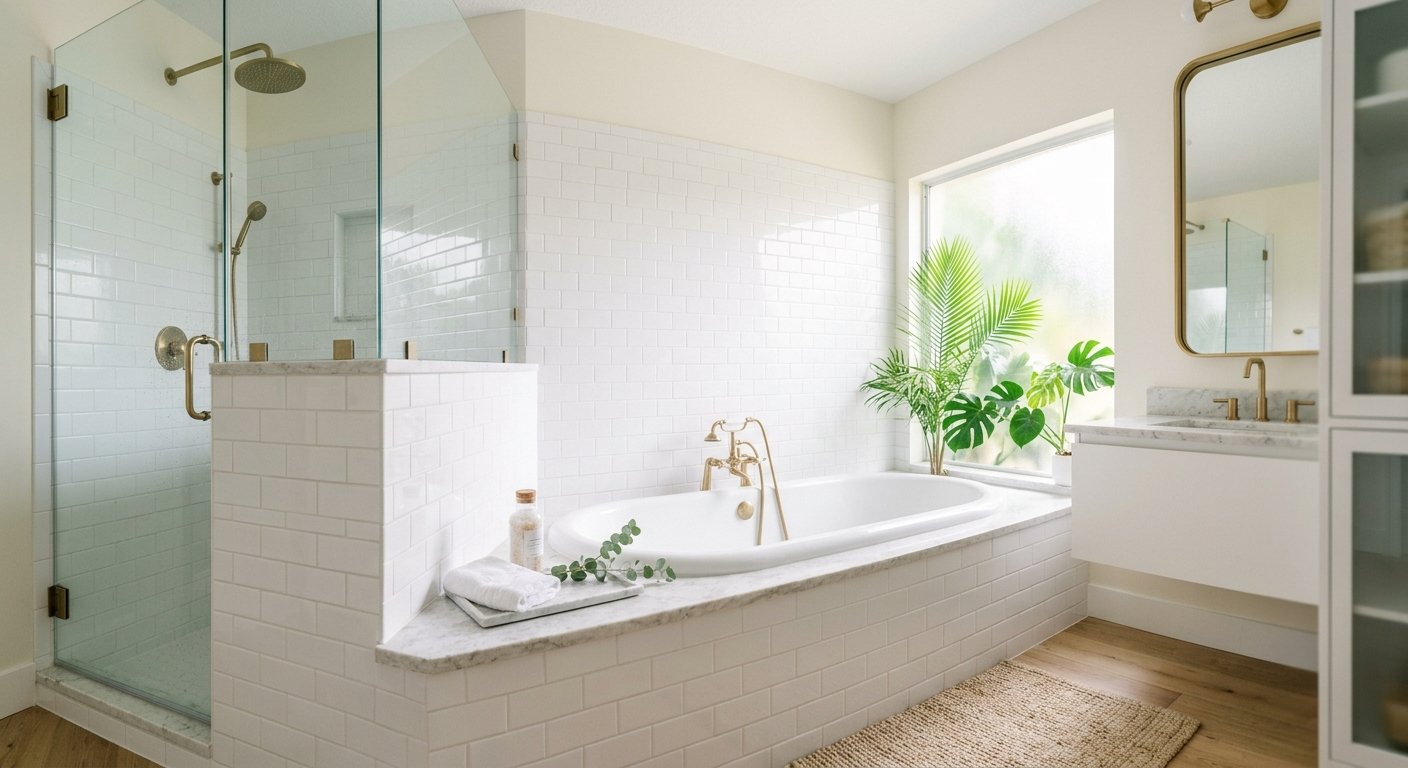
Tile reglazing — also called tile refinishing — is a process where a professional spray-applies new commercial-grade coatings directly over your existing tile, restoring the surface without removing a single piece. For South Florida homeowners dealing with dated bathroom tile, it delivers a clean, like-new result in hours to one day, at a fraction of what full replacement costs, with no demolition mess and no contractor parade through your home.
- Tile reglazing coats existing tile in place — no demo, no dust, no plumbing disruption.
- Most bathroom tile jobs are completed in hours to one day; surfaces cure in 24–48 hours before normal use.
- The process works on ceramic, porcelain, cultured marble, and fiberglass tile surrounds.
- Color options are wide — including custom matching — so you aren’t stuck with almond or harvest gold.
- Reglazing makes the most sense for structurally sound tile; cracked substrate or severe water damage may require replacement instead.
What Tile Reglazing Actually Is (and Isn’t)
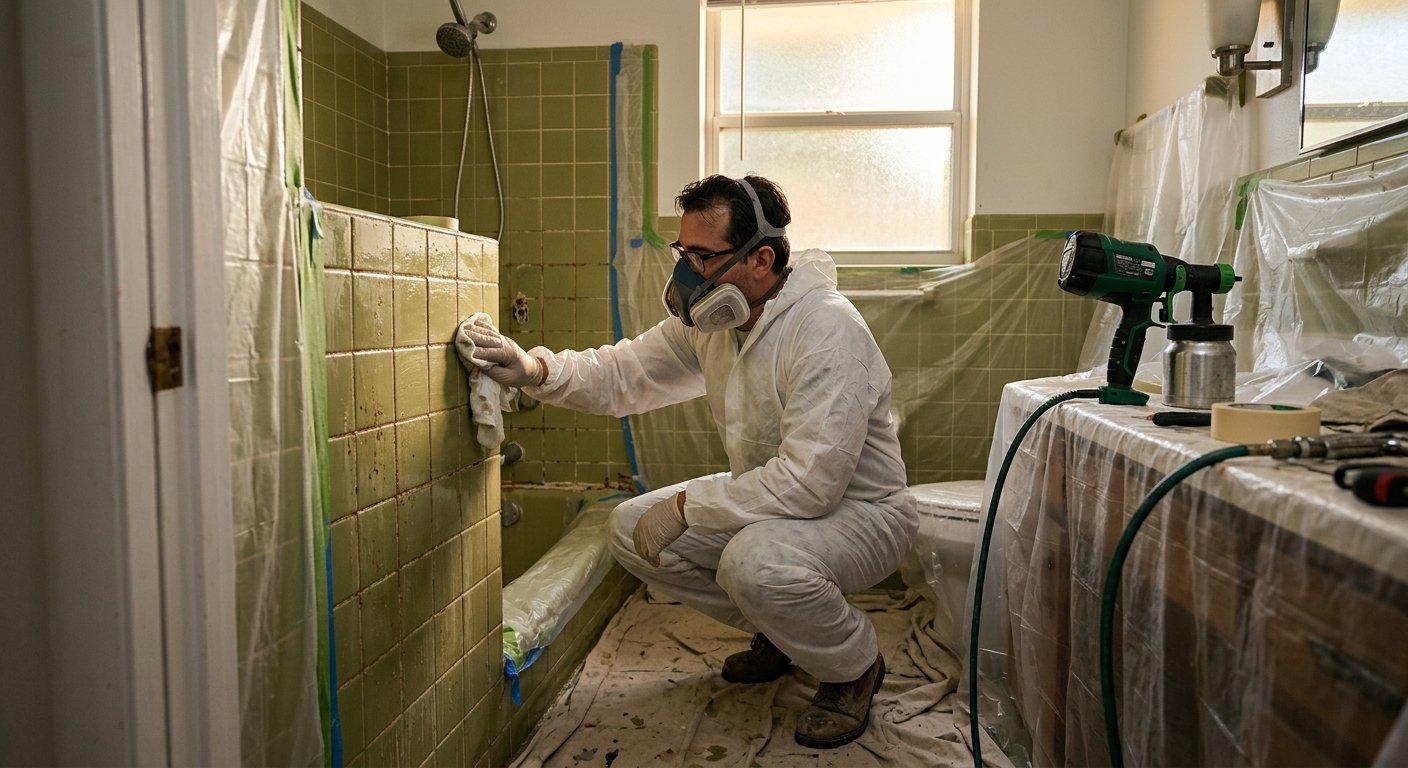
A lot of homeowners come in thinking reglazing is just a coat of paint brushed over old tile. It isn’t. Brush-on paint would leave visible stroke marks, peel quickly, and look exactly as DIY as it sounds. Professional tile refinishing uses spray-applied commercial-grade coatings — the same approach used in hotel renovations and condo turnovers across South Florida.
The process starts with thorough preparation. A technician masks and protects everything surrounding the work area, then sands the tile surface to create adhesion. From there, a chemical wash removes any soap film, mildew residue, and mineral buildup that’s common in South Florida’s hard-water environment. Two coats of self-etching primer go on next, followed by three to four spray-applied commercial finish coats. The result is a smooth, factory-like surface — not a painted look.
Grout lines are refinished right along with the tile in most projects. The coating covers the entire surface uniformly, so you end up with a clean, cohesive look rather than the two-tone tile-and-grout appearance many homeowners are trying to escape.
Reglazing is also different from replacement in one important practical way: nothing gets torn out. There’s no demolition, no risk of opening a wall to find a plumbing surprise, and no haul-away of debris. For condo owners in Boca Raton or Delray Beach where HOA renovation windows are tight and neighbor disruption matters, that distinction is significant.
What Can — and Can’t — Be Reglazed
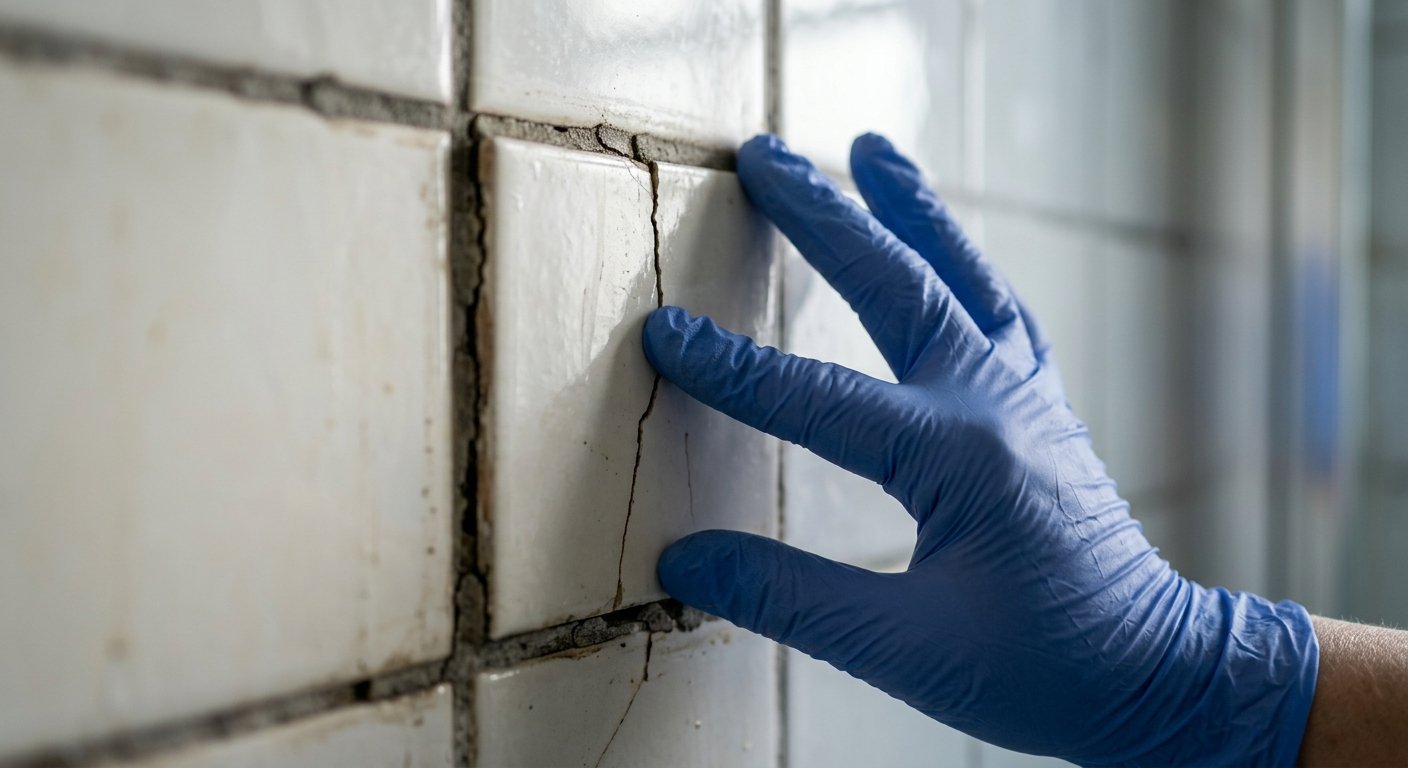
Tile refinishing works on a wider range of surfaces than most homeowners expect:
- Ceramic and porcelain wall and floor tile
- Fiberglass tub-and-shower surrounds
- Cultured marble tile and panels
- Countertop tile (bathroom vanities and kitchen backsplashes)
- Shower pan floors with non-slip safety treatments available
What refinishing can’t fix is structural damage. If tile has cracked because the substrate underneath has shifted, or if there’s active water intrusion behind the wall, the underlying problem needs to be addressed before any coating goes on. An honest refinishing contractor will tell you when replacement is the right call — and at Artistic Refinishing, that’s always the conversation we start with. Refinishing is the smart first option, but replacement has its place when the bones aren’t sound.
Refinishing is the smart first option — but an honest contractor will tell you when replacement is the right call.
Why It Matters Specifically in South Florida
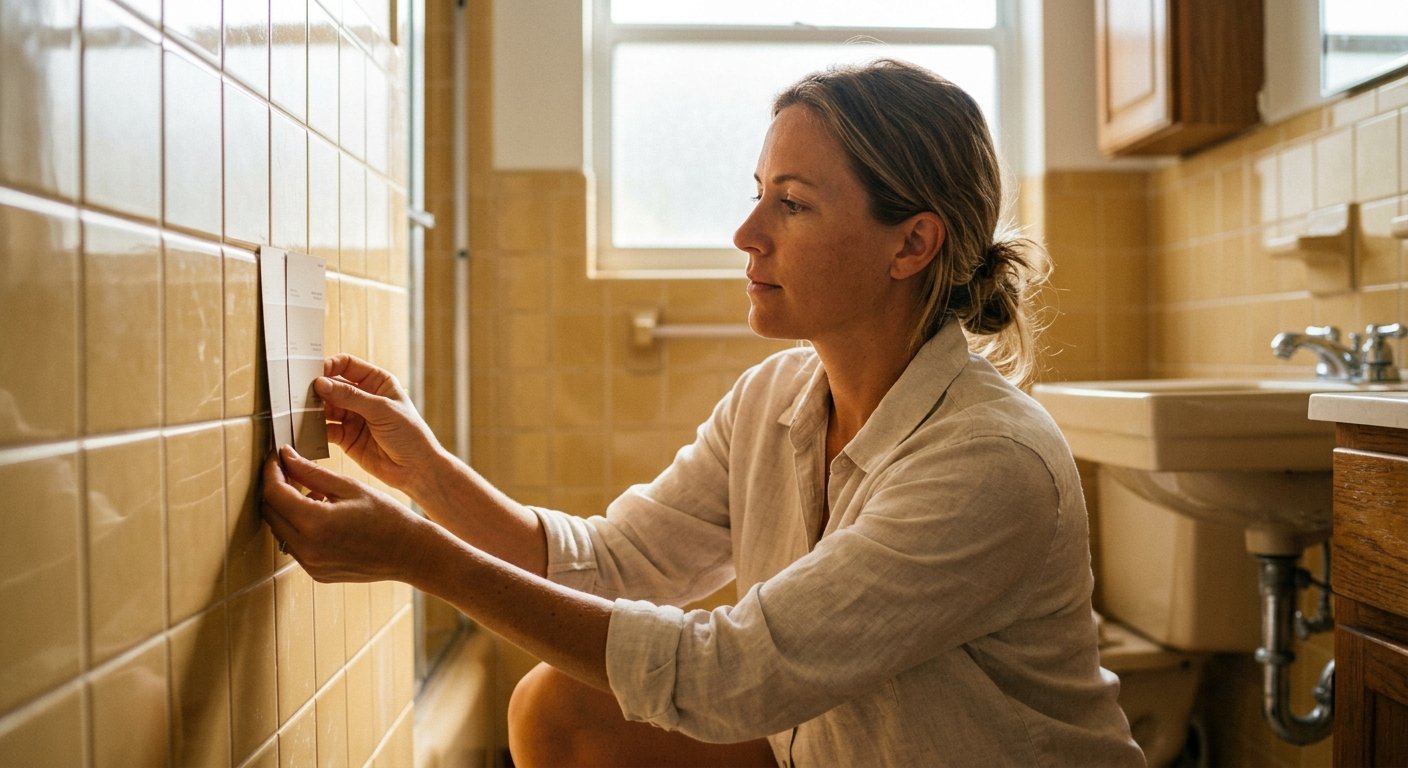
South Florida’s housing stock tells a particular story. A large share of condos and single-family homes in Palm Beach, Broward, and Miami-Dade counties were built between the late 1970s and early 2000s. That means a lot of bathrooms still have original tile — and original tile colors. Think pink, seafoam green, harvest gold, and builder-beige. These tiles are often structurally fine; they’re just stuck in a decade that’s long past.
Coastal humidity adds another layer of wear. Mineral deposits from hard water, soap scum that never fully scrubs off, and grout that’s gone gray or dark over time — these are the complaints we hear most. According to the U.S. Environmental Protection Agency, South Florida municipalities consistently rank among areas with higher dissolved mineral content in municipal water supply, which accelerates surface staining in bathrooms.
For rental property owners managing unit turnovers in Fort Lauderdale or Lake Worth, the calculus is straightforward: a bathroom tile refinishing job can be done in a day, with surfaces ready for normal use within 24–48 hours. That’s a realistic turnaround between tenants versus the weeks a full tile replacement can take.
| Factor | Tile Refinishing | Full Tile Replacement |
|---|---|---|
| Time to complete | Hours to one day | Days to weeks |
| Demolition required | No | Yes |
| Disruption to home | Minimal | Significant |
| Color options | Wide, including custom | Wide, but inventory-dependent |
| Works on existing substrate | Yes (if structurally sound) | Substrate rebuilt as needed |
| Cure before use | 24–48 hours | Grout cure: 24–72 hours minimum |
The Five-Step Process, Explained Simply
Understanding what actually happens during a tile refinishing visit helps homeowners set realistic expectations — and feel confident about what they’re getting.
Mask and protect
Everything adjacent to the work area — fixtures, flooring, vanities, tub hardware — gets masked off carefully. This keeps overspray contained and protects surrounding surfaces.
Sand the surface
The existing tile is sanded to create a mechanical profile for the primer to grip. Skipping this step is why DIY kits fail — adhesion starts here.
Chemical wash
A thorough chemical cleaning removes soap film, hard-water scale, mildew, and any contaminants that would compromise the coating bond.
Two coats of self-etching primer
Self-etching primer chemically bonds to the tile surface and creates the foundation layer the finish coats need to perform correctly.
Three to four commercial finish coats
Spray-applied commercial-grade finish coats go on in sequence. The spray application is what produces the smooth, even surface — no brush marks, no roller texture.
Materials, Odor, and Staying Home During the Job
One common concern is whether the chemicals involved mean you need to vacate the house. With Artistic Refinishing’s low-odor, low-VOC materials, most customers are able to stay home while the work is being done. The coating process involves ventilation, and the technician manages airflow carefully — but it’s a far cry from a full remodel where your home becomes a construction zone for weeks.
The EPA’s guidance on indoor VOC exposure notes that proper ventilation during coating applications significantly reduces concentration levels in occupied spaces. Low-VOC formulations take that a step further by reducing the source emissions themselves.
On the day of your tile refinishing appointment, plan to keep the bathroom well-ventilated and avoid using the shower or tub for the full 24–48 hour cure window. Light use of other bathrooms in the home is completely unaffected.
When Refinishing vs. Replacing Tile Is the Right Call
Bathroom tile reglazing makes strong sense when your tile is structurally intact but visually dated, stained, or discolored. It’s the right move for cosmetic updates before a home sale, tenant turnovers, budget-conscious refreshes, and situations where demolition isn’t feasible — like load-bearing tile walls or condos with strict renovation rules.
Replacement becomes necessary when tile is cracking due to substrate movement, when waterproofing behind the wall has failed, or when you’re making a layout change. According to the National Association of Home Builders, bathroom remodels consistently rank among the most expensive home improvement projects — a reality that makes a well-executed refinishing job genuinely worth considering first.
If you’re weighing options for a full tile refinishing project, Artistic Refinishing can also help with connected surfaces — including tub refinishing and shower refinishing — so your entire bathroom gets the same cohesive update in one visit.
Frequently Asked Questions
How long does tile reglazing last?
With proper care — gentle cleaners, no abrasive scrubbing pads — a professionally reglazed tile surface holds up well for many years. Longevity depends on how the surface is maintained and what the original substrate condition was. We’re always honest that care plays a real role in the outcome; no responsible refinisher guarantees a permanent result.
Will it look painted, or will it look like real tile?
Spray-applied commercial coatings produce a smooth, even finish that looks nothing like a brushed-on paint job. The spray process eliminates brush marks and gives the surface a consistent sheen. Most guests won’t know the tile was refinished — they’ll just notice the bathroom looks clean and updated.
Can I pick a different color, or am I stuck with what I have?
Color options are wide, and custom color matching is available. Whether you want bright white, warm bone, or something entirely different, the refinishing process can get you there. That’s often the biggest draw for homeowners stuck with 1980s tile colors they’ve lived with for too long.
Is the process safe for my home and family?
Artistic Refinishing uses low-odor, low-VOC materials, and the technician manages ventilation throughout the job. Most customers stay home during the work. The 24–48 hour cure window is the main practical consideration — keep the bathroom ventilated and unused during that period.
Do you refinish tile in condos and rental units?
Yes — a significant portion of our work is in condos, rental units, and multi-family properties across Palm Beach, Broward, Miami-Dade, Martin, and St. Lucie counties. No demolition means no noise violations, no debris hauling, and turnaround that fits most HOA renovation windows.
Ready to see what your tile could look like?
Artistic Refinishing is a family-owned South Florida business with 30+ years of local refinishing experience — licensed, insured, and ready to give you a free estimate with no obligation.

About Artistic Refinishing
Don't replace it. Refinish it. Family-owned since 1994, Artistic Refinishing spray-applies commercial-grade coatings to bathtubs, showers, tile, countertops, cabinets, and vanities across South Florida — like-new results in days, at a fraction of the cost of replacement, with no demolition. Visit artisticrefinishing.com →