
How to Refinish Cultured Marble Vanity Tops
 By Lisa McCabe
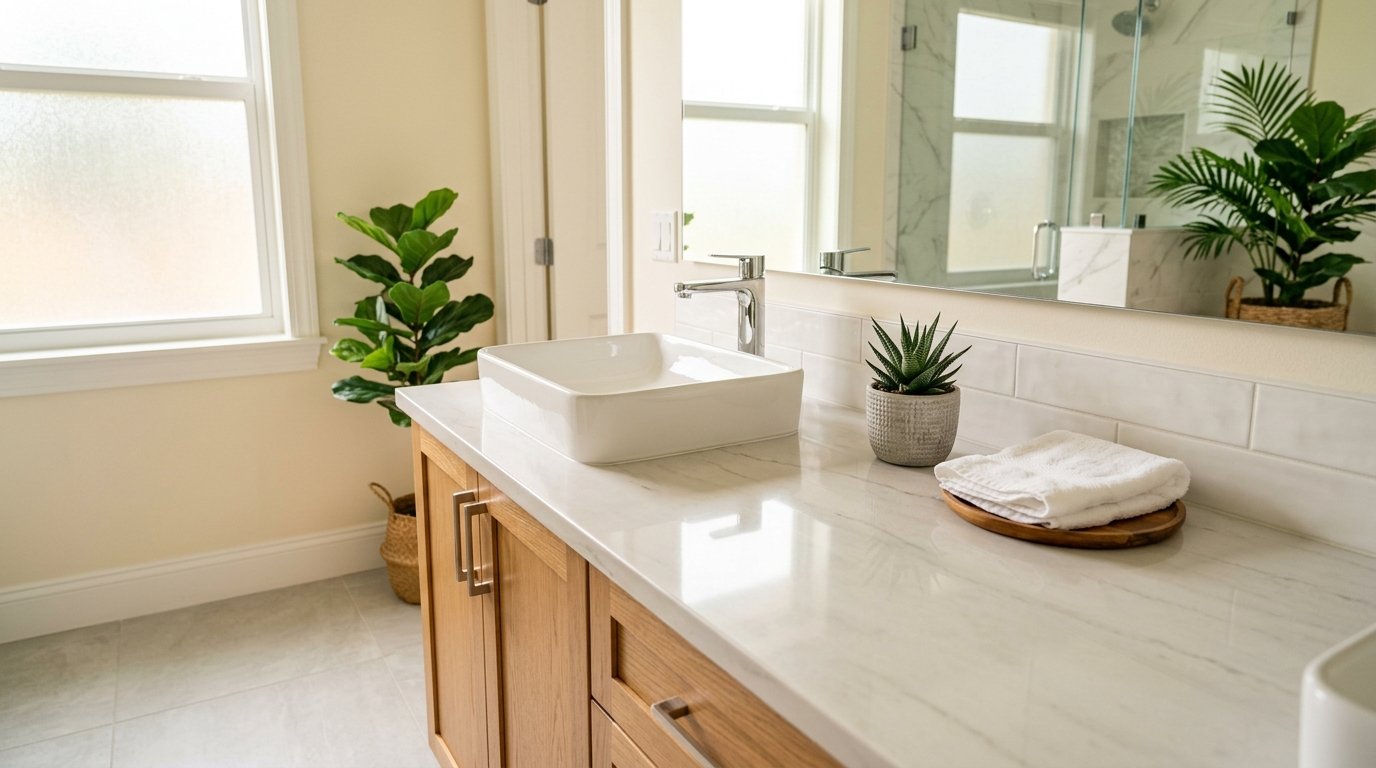
Cultured marble vanity tops can be refinished in place using a professional spray-applied coating process — no demolition, no replacement. A licensed refinisher cleans, sands, primes, and applies multiple commercial-grade finish coats directly to the existing surface. The result is a smooth, like-new appearance completed in hours to one day, with a 24–48 hour cure window before normal use. This applies to most cultured marble vanities in good structural condition.
- Cultured marble is one of the most refinishable surfaces in a bathroom — the gel-coat exterior bonds well with professional spray coatings.
- The five-step process (mask, sand, chemical wash, self-etching primer, finish coats) prepares the surface at the molecular level for a durable bond.
- Most cultured marble vanity tops are completed in hours to one day; cure time is 24–48 hours before normal use.
- Refinishing typically costs a fraction of full vanity replacement, with no demo, no mess, and no contractor coordination.
- Results depend on proper care — refinished surfaces are durable, but not indestructible.
What Is Cultured Marble, and Why Does It Dull Over Time?
Cultured marble is an engineered material — crushed limestone or marble dust blended with polyester resin, cast into shape, and protected by a clear gel coat on the surface. It’s been a staple of South Florida bathrooms since the 1980s, and you’ll find it in thousands of condos and single-family homes across Boca Raton, Delray Beach, Boynton Beach, and the Fort Lauderdale corridor.
The gel coat is what gives cultured marble its shine — and it’s also what takes the daily beating. Hard water minerals etch the surface, cleaning products scratch it, and years of coastal humidity do the rest. By the time a vanity top looks truly dull, stained, or crazed, the gel coat has degraded. But the underlying material is usually sound. That’s the critical distinction: a bad-looking surface doesn’t necessarily mean a failing one.
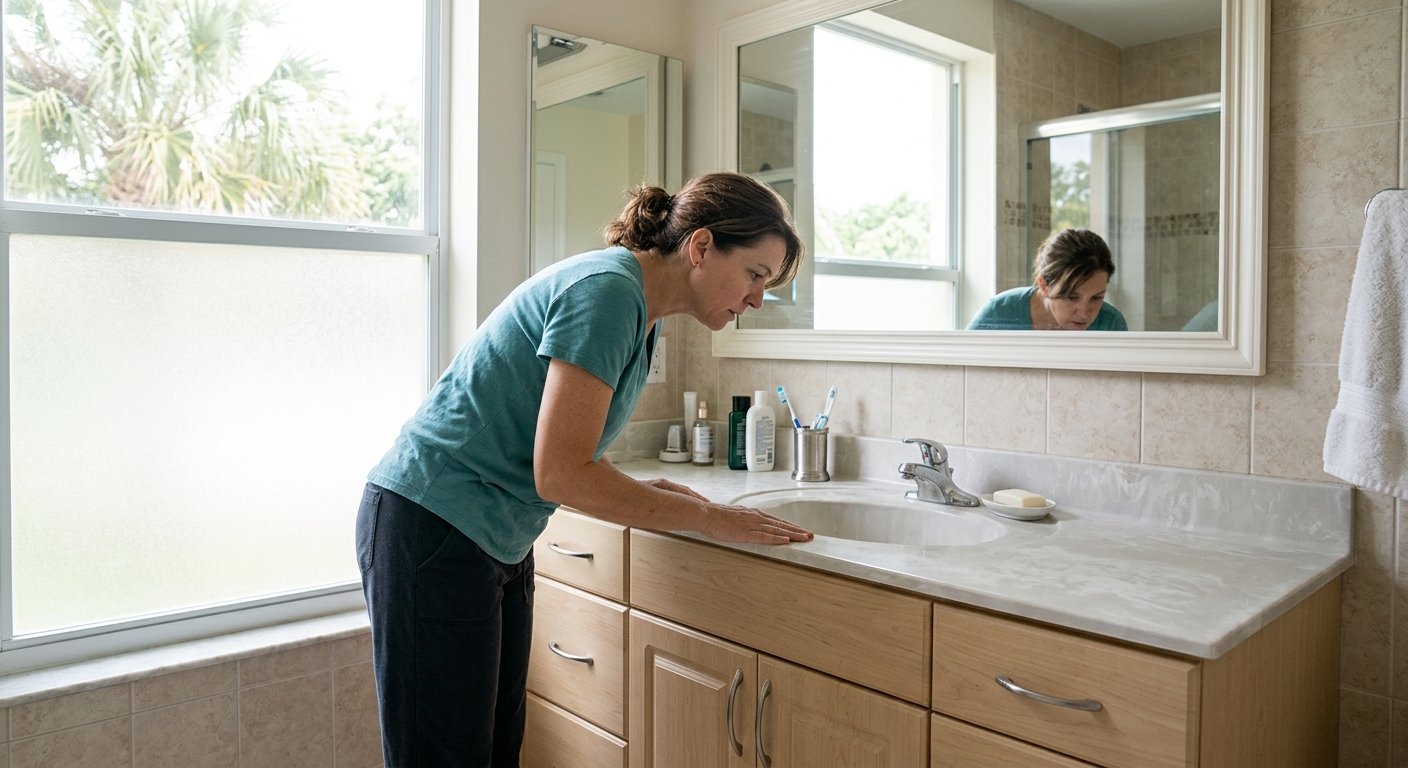
Run your hand across the vanity surface. If you feel hairline cracks but no soft spots, flexing, or delamination, the substrate is almost certainly still refinishable. Deep chips can often be filled as part of the prep process before the finish coats go on.
Refinishing vs. Replacing: What You Actually Gain
This is the question most homeowners get to eventually. Replacing a cultured marble vanity top means disconnecting plumbing, removing the old unit, choosing and ordering new material, waiting on fabrication, and scheduling a plumber for reinstallation. That’s time, cost, and disruption stacked on top of each other.
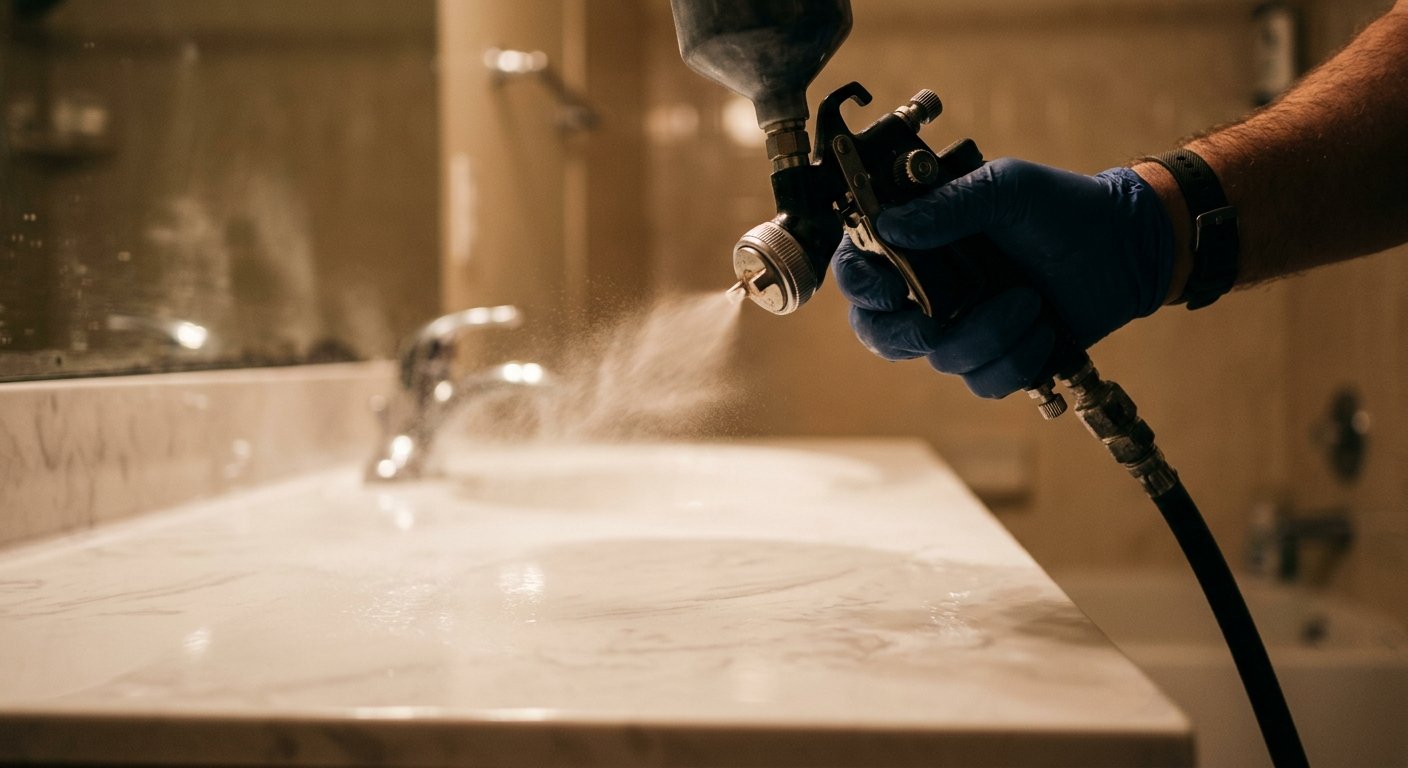
Refinishing — done by a professional with commercial-grade spray equipment — skips all of that. The vanity stays in place. No demo dust. No contractor parade. According to the National Association of Home Builders, bathroom remodeling consistently ranks among the most disruptive home improvement projects for occupied households, largely because of the multi-trade coordination it requires. Refinishing sidesteps that problem entirely.
| Factor | Refinishing | Replacement |
|---|---|---|
| Time to complete | Hours to one day | Days to weeks |
| Demo required | None | Yes — full removal |
| Plumbing disruption | None | Disconnect & reconnect |
| Cost | Fraction of replacement | Full material + labor |
| Color options | Any color, custom matching | Limited to available stock |
| Cure before use | 24–48 hours | None (once installed) |
| When NOT appropriate | Structural damage, major cracks | — |
There are cases where replacement is the right call — major structural cracks, water damage underneath the vanity cabinet, or a layout change. A good refinisher tells you honestly which category you’re in. At Artistic Refinishing, if a surface isn’t a strong candidate for refinishing, we say so upfront.
The Professional Refinishing Process, Step by Step
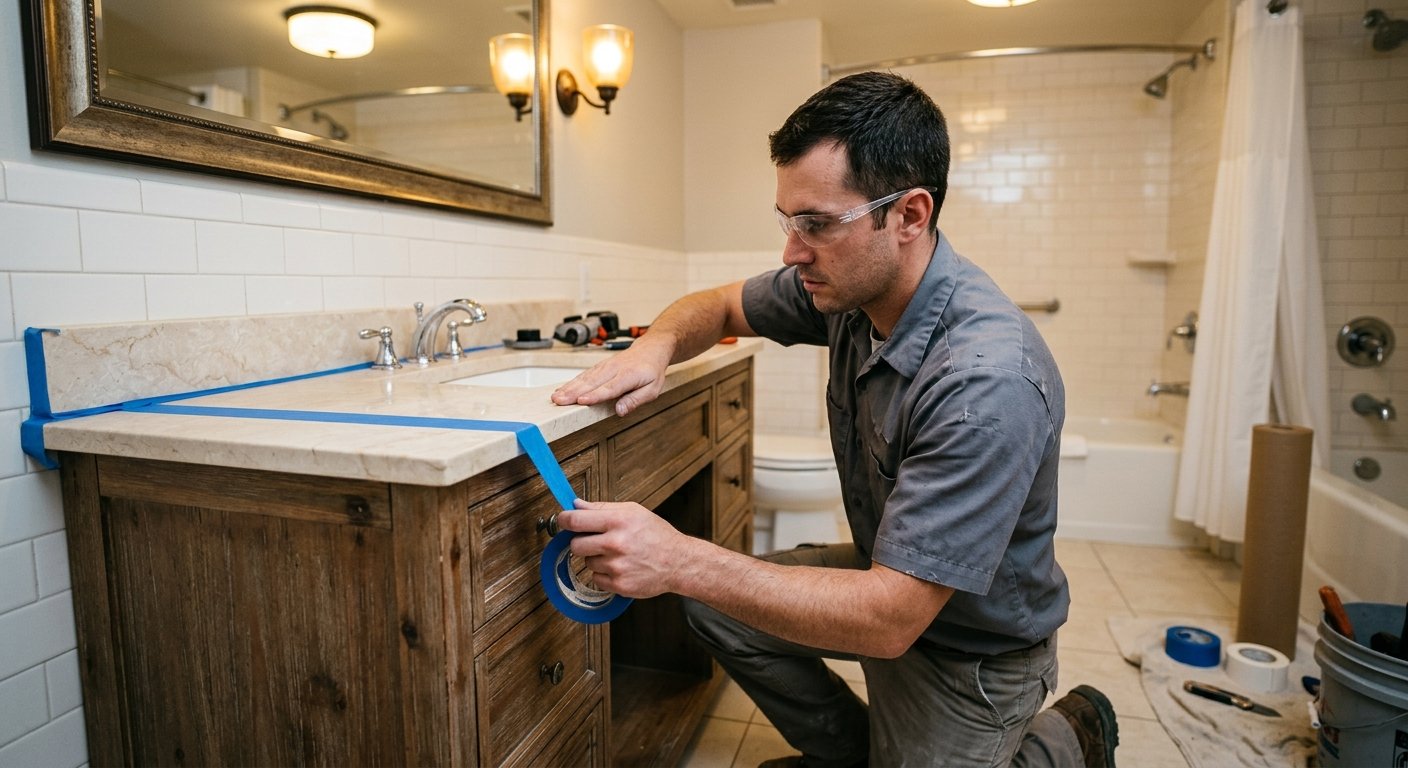
Professional cultured marble refinishing isn’t brushing on paint and hoping for the best. The prep work is where durability lives. Here’s exactly what a proper job looks like:
Mask and protect
Every adjacent surface — walls, mirrors, plumbing fixtures, cabinets — gets masked and covered. Low-VOC, low-odor materials are used throughout, so customers can remain in the home during the work.
Sand
The existing gel coat is abraded to create mechanical adhesion for the new coating. This step removes surface oxidation, minor scratches, and dull spots while opening the surface for primer bonding.
Chemical wash
A professional-grade solvent cleaner removes any remaining oils, residue, or contaminants. This step is what makes the bond reliable — skipping it is why DIY refinishing jobs often fail early.
Two coats of self-etching primer
Self-etching primer chemically bonds to the substrate rather than just sitting on top of it. Two coats build the foundation that the finish coats need to adhere correctly and resist peeling.
3–4 spray-applied commercial-grade finish coats
Commercial coatings are applied with professional spray equipment, building a smooth, even finish with depth and gloss. This is what creates the factory-like appearance — no brush marks, no roller texture, no lap lines.
The prep work is where durability lives — the finish coats are only as good as what’s underneath them.
Color Options and Custom Matching
One of the most underrated advantages of vanity refinishing is color flexibility. If the original bone-white or almond gel coat no longer suits the bathroom, the refinished surface can be any color — including custom matches to your tile, flooring, or cabinetry. This makes refinishing especially practical for South Florida homeowners updating a bathroom in phases, or for anyone trying to create visual cohesion without replacing every surface at once.
Landlords across Palm Beach and Broward counties often use this to standardize unit appearances across multiple bathrooms without the cost of sourcing matching vanity tops.
The Marble Institute of America notes that cultured marble surfaces require non-abrasive cleaners to maintain their finish. This applies equally to refinished surfaces — gentle cleaning habits directly extend the life of the coating.
What to Expect After the Work Is Done
The 24–48 hour cure window before normal use is non-negotiable. The coating needs time to fully harden, and exposing it to water or soap before it cures risks compromising the finish. Most homeowners plan around this easily — the work is typically done in a single day, so one overnight before use is the typical ask.
After that, care is simple: use non-abrasive liquid cleaners, avoid scouring pads, and skip harsh chemicals like acetone or bleach-heavy products. With reasonable maintenance, a professionally refinished cultured marble top holds up well for years of daily use — though we’ll always be honest that longevity depends on how the surface is treated and the condition of the substrate going in.
For a deeper look at the full scope of what vanity resurfacing involves, the vanity refinishing page covers materials, process expectations, and what makes a vanity a good candidate. Homeowners with a tub or shower in similarly dated condition should also see what’s possible with tub refinishing and shower refinishing — often the smarter move is refreshing the whole bathroom at once, which keeps travel and setup costs down.
Frequently Asked Questions
Can all cultured marble vanity tops be refinished?
Most can, as long as the underlying structure is sound. Surface dullness, staining, minor chips, and gel-coat crazing are all good candidates. Deep structural cracks, delamination, or water damage underneath the unit may mean replacement is more appropriate. A professional assessment before booking is the right starting point.
Will it look like it was painted?
No — when done correctly with professional spray equipment and commercial coatings, the result is a smooth, glossy finish with real depth. The key difference from DIY approaches is that spray-applied coatings don’t leave brush marks or roller texture. The finish is factory-like, not painted-looking.
How long does the refinishing process take?
A typical cultured marble vanity top is completed in a few hours to one day. The surface then needs 24–48 hours to cure before normal use — water, soap, and cleaning should wait until that window has passed.
Is this process safe to have done at home?
Yes. Artistic Refinishing uses low-odor, low-VOC materials, and the work area is fully masked before any spray coating begins. Customers can remain in the home during the job. Proper ventilation in the bathroom is standard practice throughout the process.
Is refinishing a good option before selling a home?
It’s one of the most cost-effective pre-listing improvements available. A dated or stained vanity top can make an entire bathroom feel worn. Refinishing brings it back to a presentable condition quickly and for significantly less than replacement — relevant for South Florida sellers working within tight timelines or HOA renovation windows.
Get a free estimate on your cultured marble vanity
Artistic Refinishing has been serving South Florida homeowners — from Boca Raton to Fort Lauderdale and across Palm Beach, Broward, Miami-Dade, Martin, and St. Lucie counties — since 1994. Licensed and insured. No demolition. Results in days.
Call 561-394-6116

About Artistic Refinishing
Don't replace it. Refinish it. Family-owned since 1994, Artistic Refinishing spray-applies commercial-grade coatings to bathtubs, showers, tile, countertops, cabinets, and vanities across South Florida — like-new results in days, at a fraction of the cost of replacement, with no demolition. Visit artisticrefinishing.com →