
7 Signs Your Shower Tile Needs Refinishing
 By Lisa McCabe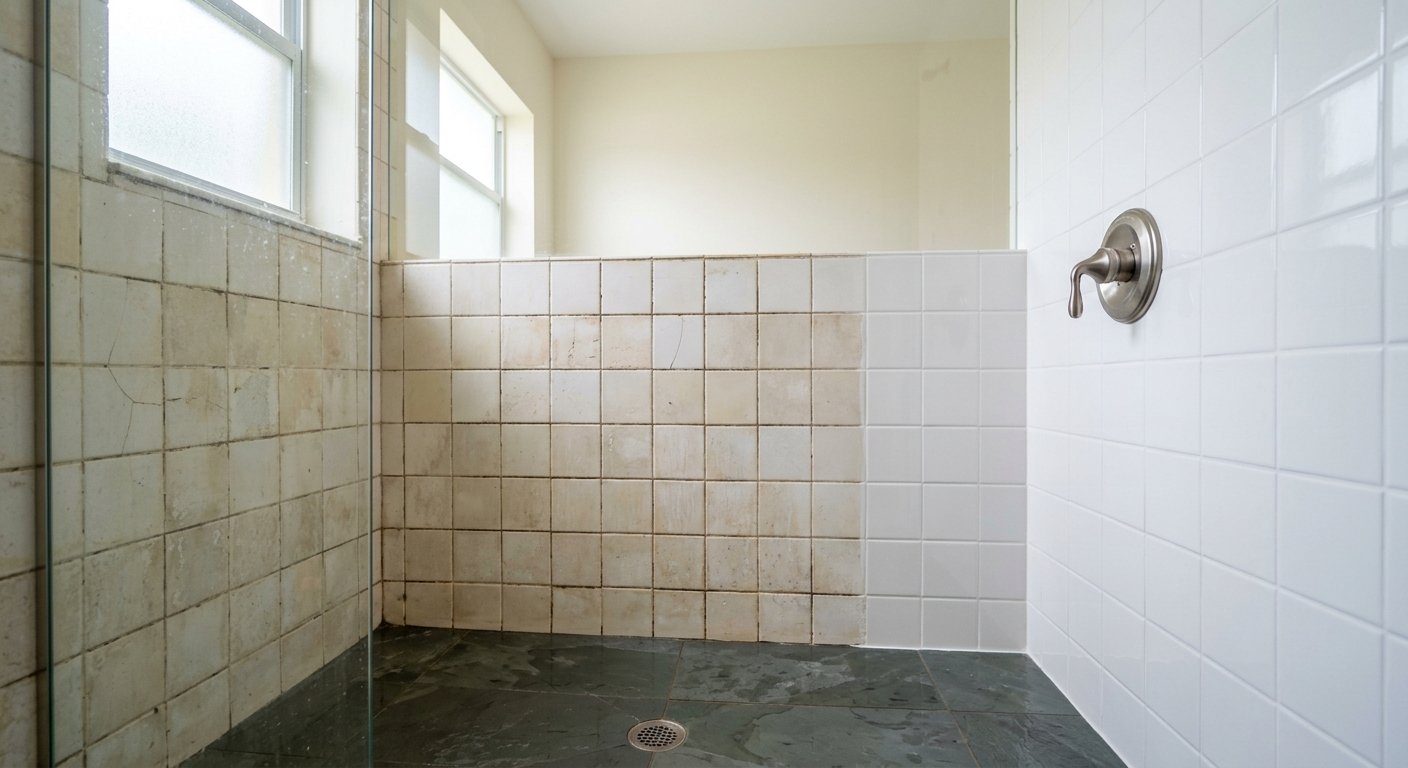
Most South Florida homeowners don’t realize there’s a middle ground between scrubbing a stained shower for the tenth time and gutting the whole bathroom. That middle ground is tile refinishing — and for a lot of dated or lightly damaged tile, it’s the smarter call. Before you call a contractor and start talking demo, run through these seven signs first. If your shower matches even a few of them, refinishing is almost certainly the right move.
What Is Tile Refinishing, Anyway?
Tile refinishing (also called tile reglazing or tile resurfacing) means coating your existing tile with a fresh, commercial-grade finish — right where it sits, with no removal and no demolition. The process bonds a durable spray-applied coating directly to the tile surface, giving it a like-new appearance in a fraction of the time and cost of a full replacement. At Artistic Refinishing, we follow a five-step process: mask and protect the work area, sand the surface, apply a chemical wash, spray two coats of self-etching primer, and finish with three to four coats of commercial-grade spray finish.
Curious about the full process? Our tile refinishing service page covers it in detail.
Sign 1: The Grout Is Discolored but the Tile Is Intact
Grout discoloration — that familiar gray-to-black creep along the joints — is the most common cosmetic complaint we hear from homeowners in Boca Raton and Delray Beach. If the tile itself is solid and uncracked, discolored grout is a refinishing problem, not a replacement problem. Replacing tile because the grout looks bad is like buying a new car because the floor mats are dirty.
Refinishing covers grout lines along with the tile surface, delivering a clean, uniform finish that’s also easier to maintain going forward.
Sign 2: The Color Is Just Outdated
South Florida has a lot of 1980s and 1990s homes. Mauve tile, harvest gold, almond — these colors were everywhere, and they’re not coming back in style. If your tile is in perfectly good condition but the color makes the bathroom feel stuck in another decade, you don’t need to replace it. You need to refinish it.
Refinishing allows for any color, including custom color matching. That means you can go from harvest gold to a clean matte white or a modern gray without touching a single tile. According to the National Association of Home Builders, bathroom updates consistently rank among the top home improvement priorities for resale value — and tile color refresh through refinishing delivers that improvement at a fraction of replacement cost.
Sign 3: There Are Surface Chips or Shallow Scratches
Tile isn’t indestructible. Dropped shampoo bottles, abrasive cleaning products, and years of use leave their marks. If you’re dealing with surface chips or fine scratches — not deep cracks that go through the tile body — those are repairable. Chip and spot repair is part of what we do before the finish coats go on.
The key distinction: surface damage vs. structural damage. If the tile is cracked through or if there’s flex when you press on the wall (which can indicate water damage behind the tile), that’s when replacement becomes the honest recommendation. Refinishing works on what’s structurally sound.
Sign 4: Hard-Water Stains Won’t Budge
Coastal Florida’s water supply runs hard in many areas, and the result shows up as mineral buildup — that chalky white or orange-tinted film that clings to tile no matter how much you scrub. When the mineral deposits have etched into the surface glaze of older tile, cleaning products stop working. The damage is in the surface itself.
Refinishing solves this at the root. We prep the surface, remove the compromised glaze layer, and apply a fresh commercial coating. The result isn’t just cleaner-looking — it’s a genuinely new surface that resists staining more effectively than the original aged tile.
Sign 5: The Finish Has Gone Dull or Porous
Tile that was once shiny can lose its gloss over time, especially with repeated exposure to harsh cleaners. When the surface becomes porous, it traps soap scum and mildew more easily — which creates a cycle of harder cleaning and more surface wear. If your tile looks perpetually dull no matter how recently you cleaned it, the glaze has worn down.
This is a textbook refinishing scenario. The new coating restores surface density and sheen. Because we use low-VOC, low-odor materials, customers can typically stay home during the work — no hotel stay required. Cure time is 24 to 48 hours before normal use, and a standard shower tile job is usually completed in one day.
Sign 6: You’re Prepping to Sell or Rent
Real estate agents and landlords throughout Palm Beach and Broward counties call us before listings go live. A bathroom with tired, stained, or discolored tile can cost a seller negotiating leverage — or cost a landlord a qualified tenant. Refinishing delivers a genuinely fresh look on a short timeline, which matters when you’re working around showing schedules or unit-turn deadlines.
For property managers handling multiple units, we also offer commercial refinishing services that can be scheduled efficiently across buildings. The U.S. Department of Housing and Urban Development notes that maintained property conditions directly affect habitability standards and marketability — refinishing helps landlords meet both goals without the disruption of full remodels.
If your project has a city-specific angle, we serve homeowners and property managers from West Palm Beach down through Miami-Dade, including Boynton Beach, Lake Worth, Palm Beach Gardens, and throughout Broward County.
Sign 7: The Thought of Demo Makes You Cringe
Full tile replacement means demolition — breaking out old tile, disposing of it, potential water damage exposure behind the walls, new substrate work, re-tiling, re-grouting, and then waiting for everything to cure and dry. It also means days or weeks without a functional bathroom. For occupied homes, that’s genuinely disruptive. For condos with HOA renovation windows, it can be nearly impossible to schedule.
If the tile itself is structurally sound and you just want it to look good again, there’s no good reason to go through that process. Refinishing means no demolition, no construction dust, and no plumbing disruption. The bathroom stays intact — it just looks completely different when we leave.
For a deeper look at shower-specific refinishing, visit our shower refinishing page.
When Replacement Is the Right Call
Refinishing isn’t the answer for every situation, and we’ll be straightforward about that. If there’s active water intrusion behind the tile, structural cracking in the substrate, or mold that has penetrated the wall, the tile needs to come out — and a contractor needs to address what’s behind it before any new surface treatment makes sense. Refinishing works on surfaces that are cosmetically tired, not structurally compromised. That distinction matters, and any reputable refinisher will tell you the same thing.
Frequently Asked Questions
Will refinished tile look painted, or will it look like real tile?
The spray-applied finish we use is a commercial-grade coating applied in multiple coats — it doesn’t look like brush-painted tile. The surface is smooth and uniform, like a factory glaze. That said, results depend on surface prep and substrate condition, which is why our five-step process starts with sanding and chemical washing before any coating goes on.
How long does shower tile refinishing take?
Most shower tile jobs are completed in one day. The surface then needs 24 to 48 hours to cure before normal use. You can stay home during the work — our low-VOC materials and thorough masking keep the process contained and manageable.
Can you refinish tile in any color?
Yes. We can apply any color, including custom color matching. If you want to move away from outdated almond or mauve tile to a clean white or modern neutral, that’s entirely doable without replacing a single tile.
How is tile refinishing different from tile reglazing or tile resurfacing?
These terms are often used interchangeably in the industry. Refinishing, reglazing, and resurfacing all refer to the same process: cleaning, priming, and applying a fresh coating to an existing tile surface. The difference is mostly in terminology, not technique.
Does refinishing work on all types of shower tile?
Refinishing works on ceramic, porcelain, and many other tile types. It also works on surrounding surfaces like tub surrounds and shower bases. The condition of the tile matters more than the material — structurally sound tile in good substrate condition is the right candidate for refinishing.
Ready to Stop Scrubbing and Start Refinishing?
If your shower tile checks any of the boxes above, the next step is a free estimate — no obligation, no sales pressure. Artistic Refinishing has been serving South Florida homeowners since 1994, and we’re licensed, insured, and locally family-owned. We cover Palm Beach, Broward, Miami-Dade, Martin, and St. Lucie counties.
Call us at 561-394-6116 or visit our tile refinishing page to request your free estimate. Don’t replace it. Refinish it.